Reviews
Wooden Shapes Puzzle Game offers a calm and focused learning experience for toddlers. The drag-and-drop mechanics are smooth and responsive, making it easy for small hands to use. Each level presents a fresh puzzle that reinforces shape and color recognition without repetition. The game encourages problem-solving and fine motor skills in a stress-free way. It is a reliable choice for parents seeking quality educational content for their children.
About this game
Game Introduction
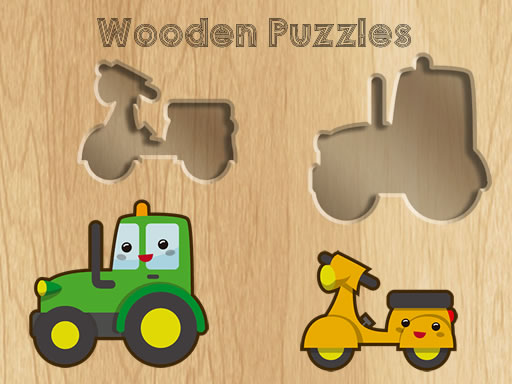
Wooden Shapes Puzzle Game is an educational puzzle game designed to introduce young learners to basic geometry in a playful and engaging way. The core objective is to match various wooden shapes—such as squares, rectangles, triangles, and irregular forms—to their corresponding outlines on a grid. This game uniquely combines shape and color recognition with problem-solving skills, all within a calm, pressure-free environment. It is tailored for toddlers, preschoolers, and kindergarten children, encouraging independent exploration and cognitive development. Parents can trust this family-friendly setting to provide meaningful screen time that supports early learning milestones.
How to Play
Playing Wooden Shapes Puzzle Game is straightforward and intuitive. Players look at the grid displaying outlines of different shapes, and then select a wooden block from a side panel. Using a simple drag-and-drop action, they move the shape over the grid and release it when it hovers over the matching outline. If the shape is correct, it snaps into place. The goal is to fill every slot without gaps or overlaps. There are no timers or scores, allowing children to play at their own pace. The game ends when the entire grid is complete, providing a satisfying sense of accomplishment.
Game Features
Key features of Wooden Shapes Puzzle Game include colorful wooden shapes that attract attention and a simple drag-and-drop interface designed for small fingers. The educational content teaches shape and color recognition while promoting fine motor skill development through precise movements. Each level presents a new arrangement of shapes, offering variety without overwhelming the player. The grid is clearly defined, and shapes are sized appropriately for young children. The game may include multiple levels or arrangements to keep the experience fresh and engaging. Its ad-free environment ensures a safe, uninterrupted playtime.
Tips for Success
To succeed in Wooden Shapes Puzzle Game, encourage children to take their time and explore each shape before dragging it. Start by matching the most distinct shapes first, such as squares or triangles, to build confidence. Practice regularly to improve shape recognition and fine motor control. If a child gets stuck, gently guide them to look at the outline's orientation and compare it to the shape's features. Celebrate each completed grid to reinforce positive learning habits. The pressure-free design means there is no rush, so allow for trial and error to foster independent problem-solving skills.
Compatibility
Play on Any Device | Chrome / Safari / Edge Recommended
 GlimmerGirl Games